
Loneliness can be especially difficult for older adults who live alone or have limited opportunities to get out into their communities.
A meaningful conversation, a welcoming group, and the chance to be truly heard can make an enormous difference.
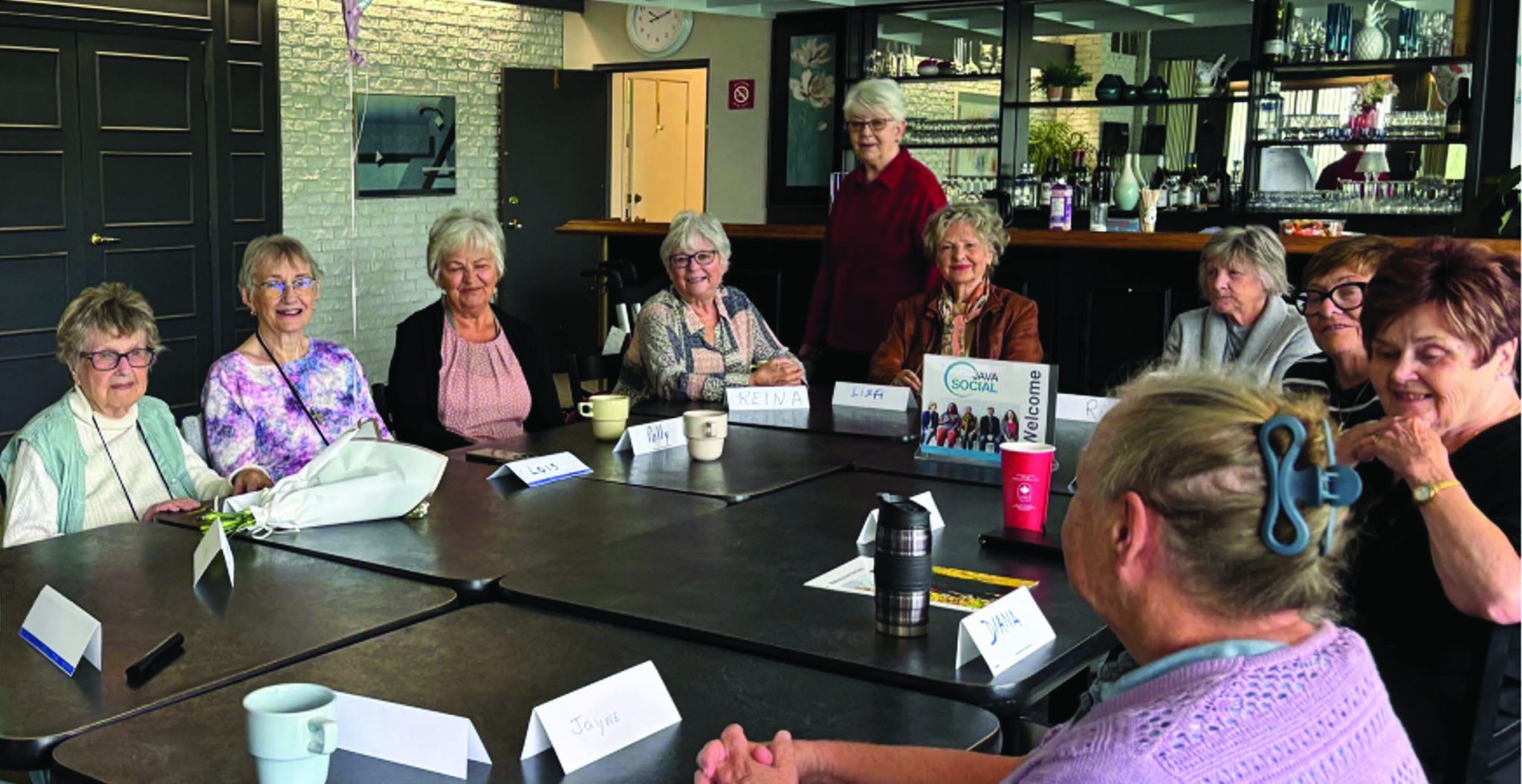
Ontario Health atHome recently conducted a multi-site pilot of Java Social, an innovative peer support program designed to help older adults build relationships, share openly, and support one another.
Ontario Health atHome is Ontario’s publicly funded service that helps people receive health care and support at home or in the community, rather than in a hospital or long-term care home.
A Weekly Place to Connect
The Java Social pilot was offered at two community locations: Q Residential: October 2025 – March 2026 and Whitby Seniors’ Activity Centre: January – March 2026.
Sessions were held once a week at each site and lasted approximately 60 to 90 minutes.
Across the two locations, 24 people attended at least one Java Social session, and 10 participants completed the program evaluation.
Over time, the weekly sessions became much more than another scheduled activity. They became a trusted place where participants could talk honestly, listen to one another, laugh together, and offer support.
The facilitator described the participants as:
“Extraordinary women who contribute so much each week. They have mentioned how much our weekly chats have meant to them, connected them to others in the community and provided a wonderful opportunity to share with others.”
Promising Results
The evaluation results showed the important role that peer support can play in strengthening social connection.
All 10 participants who completed the evaluation said that Java Social contributed to their feeling more socially connected.
One participant responded enthusiastically: “Yes, 200%!”
9 of the 10 participants also said they felt more aware of other community programs or activities and were more likely to join them as a result of attending Java Social.
The one participant who qualified her response explained that, at age 96, she was no longer able to get out and around as much as she once had.
These findings suggest that Java Social did more than create connection within the group. It also helped participants feel more connected to the wider community and more aware of opportunities available to them.
From Shyness to Laughter
When participants were asked what it had been like to take part in Java Social, their responses revealed how a sense of trust and relationships deepened over time.
One participant described the group’s transformation:
“As we met more often, we opened up. Those that were quiet began talking. Shyness became laughter. Trivial talk became deep discussions. Problem solving, sharing, insight.”
Another participant shared:
“I have really enjoyed the discussions and meeting new people who are becoming friends.”
For someone experiencing profound isolation, the group offered reassurance and hope:
“Being totally alone can sometimes be scary. Your Java angels shone a light into my life. I shall be forever grateful.”
Participants also valued the freedom to help shape the conversations themselves:
“It is not designed to talk about any particular thing that is controlled by the leaders. We pick the topic and the discussion goes where it goes. We are getting more and more comfortable telling our real feelings and getting good ideas to address concerns.”
This participant-led approach is central to Java Social. Members are not simply attending an activity planned for them. They help guide the conversation, share their experiences, listen to one another, and offer ideas, encouragement, and support.
Creating a Safe Place to Be Real
Perhaps the most powerful description of the pilot came from its facilitator, Diana MacDonald:
“Oh my, I wish you could see how much this group has grown over the past six months. They have created a wonderful sense of trust, community and caring. Every class is full of laughter, occasionally tears, but always thoughtful thinking and sharing of ideas, values and beliefs in a safe, encouraging environment. Such a GREAT program!”
— Diana MacDonald, MS, IHW, Coordinator, Self-Management, Ontario Health atHome
Her words capture what can happen when older adults are given a consistent, welcoming space to connect.
People who were once quiet began to speak. Acquaintances became friends. Everyday conversation grew into honest sharing, thoughtful reflection, problem solving, and mutual support.
The Java Social pilot with Ontario Health atHome shows that meaningful connection does not happen simply by bringing people into the same room. It grows when people feel safe enough to be themselves, when their voices matter, and when they have opportunities to care for one another.
That is how a weekly conversation can become a community—and how a community that offers structured ongoing peer support groups like Java Social, can build a sense of trust and shine light into someone’s life.