
What is Java Group Programs?
Java Group Programs are the first standardized peer support interventions designed to address the critical rates of depression and loneliness across the senior living spectrum and older adults in the community.
The programs are made up of Java Music, Java Memory, Java Mentors, Java Circle and Java Social. These programs are based on research and successfully trialled and tested for effectiveness. They have been implemented in long-term care homes, memory care, assisted living and retirement homes, adult day centers, hospitals and centers that serve older adults.
Java Group Programs are currently in over 2000 organizations throughout North America.



About the Team
President
Dr. Kristine Theurer
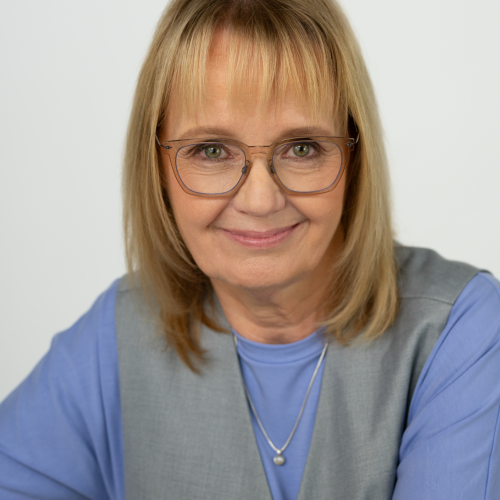
Dr. Kristine Theurer is a researcher who is pioneering the use of standardized peer support and peer mentoring programs to address loneliness and social isolation in senior living. She is a published author of a number of research articles, the most recent of which ‘It makes life worthwhile!’ Peer mentoring in long-term care—a feasibility study in the Journal of Aging & Mental Health, The Impact of Peer Mentoring on Loneliness, Depression, and Social Engagement in Long-Term Care in the Journal of Applied Gerontology and The Need for a Social Revolution in Residential Care, the most downloaded article in the Journal of Aging Studies. Kristine has completed her PhD at the University of British Columbia, leads training workshops and webinars in Canada and the US and presents regularly at international conferences. She has received numerous research awards including the Michael Smith Foundation for Health Research and the Social Sciences and Humanities Research Council of Canada. She serves on the planning committee for the national conference on culture change in Canada, hosted by the Schlegel-UW Research Institute for Aging.
President
Dr. Kristine Theurer
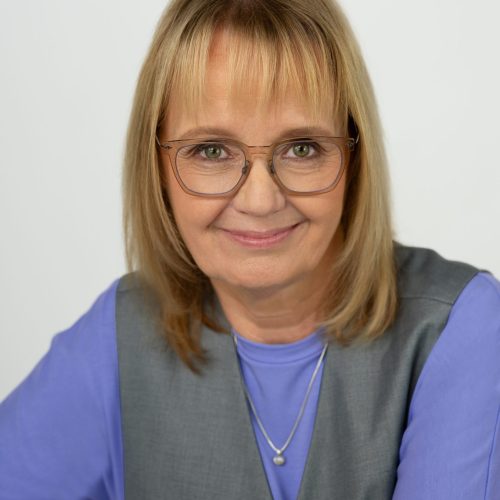
Dr. Kristine Theurer is a researcher who is pioneering the use of standardized peer support and peer mentoring programs to address loneliness and social isolation in senior living. She is a published author of a number of research articles, the most recent of which ‘It makes life worthwhile!’ Peer mentoring in long-term care—a feasibility study in the Journal of Aging & Mental Health, The Impact of Peer Mentoring on Loneliness, Depression, and Social Engagement in Long-Term Care in the Journal of Applied Gerontology and The Need for a Social Revolution in Residential Care, the most downloaded article in the Journal of Aging Studies. Kristine has completed her PhD at the University of British Columbia, leads training workshops and webinars in Canada and the US and presents regularly at international conferences. She has received numerous research awards including the Michael Smith Foundation for Health Research and the Social Sciences and Humanities Research Council of Canada. She serves on the planning committee for the national conference on culture change in Canada, hosted by the Schlegel-UW Research Institute for Aging.

CEO and Vice-President
Clayton MacKay
As Co-founder and CEO of Java Group Programs, Clayton brings many years of business experience. His experience originated in the insurance industry where he operated his own company for many years helping insurers and government in emergency and disaster situations. In addition, he worked closely with Ministry of Health in their third party cost recovery program. Clayton has also volunteered for many years with men in recovery from addiction and served as a board member for a non-profit agency that provides a vital link in the continuum of recovery services.
He has built an understanding of the strong impact of peer support groups and the ability of these groups to create positive and supportive communities. He currently serves on the committee for the Canadian Culture Change movement called ‘Walk with Me’. His plan for Java Group Programs is to standardize the use of peer support programs within senior living across Canada and the US.
CEO and Vice-President
Clayton MacKay
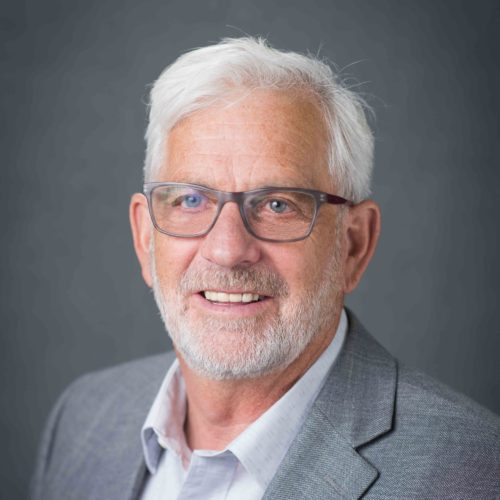
As Co-founder and CEO of Java Group Programs, Clayton brings many years of business experience. His experience originated in the insurance industry where he operated his own company for many years helping insurers and government in emergency and disaster situations. In addition, he worked closely with Ministry of Health in their third party cost recovery program. Clayton has also volunteered for many years with men in recovery from addiction and served as a board member for a non-profit agency that provides a vital link in the continuum of recovery services.
He has built an understanding of the strong impact of peer support groups and the ability of these groups to create positive and supportive communities. He currently serves on the committee for the Canadian Culture Change movement called ‘Walk with Me’. His plan for Java Group Programs is to standardize the use of peer support programs within senior living across Canada and the US.
Training and Support Specialist
Dorcas Mendez
Dorcas brings 15 years of experience in volunteer program coordination and more than 18 years working with multicultural groups in the non-profit sector and social services. Her passion for seniors started in 1992 when she worked as a Recreation Assistant in a long-term care home in Germany. Since then, she has been helping seniors and families from different educational and cultural backgrounds, in the private and public sector. She holds a Master’s in Cultural Anthropology and a Bachelor’s in Sociology. Her skills and training include: group facilitation, community network, event planning, translation services, conflict resolution and volunteer management on a small and large scale. Dorcas is also of Latin heritage and is fully conversant with written and spoken Spanish. She also has a vast experience working with immigrants and refugees in North America.

Training and Support Specialist
Dorcas Mendez
Dorcas brings 15 years of experience in volunteer program coordination and more than 18 years working with multicultural groups in the non-profit sector and social services. Her passion for seniors started in 1992 when she worked as a Recreations Assistant in a long-term care facility in Germany. Since then, she has been helping seniors and families from different educational and cultural backgrounds, in the private and public sector. She possesses a Master’s in Cultural Anthropology and a Bachelor’s in Sociology. Her skills and training include: group facilitation, community network, event planning, translation services, conflict resolution and volunteer management on a small and large scale. Dorcas is also of Latin heritage and is fully conversant with written and spoken Spanish. She also has a vast experience working with immigrants and refugees in North America.
Our commitment to diversity and inclusion.
At Java, we celebrate everyone, no matter where they are from, how they think, or who they love. We believe in the value of differences—different perspectives, experiences and backgrounds—that make each person unique.
We gratefully acknowledge that we live, work and play on the traditional unceded homelands of the Skwxwú7mesh (Squamish), xʷməθkwəy̓əm (Musqueam), and Səl̓ílwətaʔ/Selilwitulh (Tsleil-Waututh) Nations

Making the decision
Is there something different that we can do?
These were the thoughts I had when making the decision to return to school to complete an MA in Gerontology at Simon Fraser University and then a PhD at the University of British Columbia.
Evolutionary theory suggests we are hard wired to help. We look out for one another—because like animals, to be separated from the herd is dangerous. Anger can be self preservation, a reaction to fear.
Research tells us that those who engage in peer support, who help others, are healthier and happier. Although peer support programs are used in the community, they are rare within senior living.
Before coming to Simon Fraser University, I had created and conducted a pilot of a new peer support program where I worked, called the Java Music Club. I called it that as we always served coffee and I knew that few would be interested in attending something called a therapeutic non-pharmacological peer support group intervention!
The results of this program were so successful in engaging residents in helping their peers and building relationships, that I went on to develop additional programs. Java Memory Care is peer support for more advanced dementia, and the Java Mentorship Program is a team made up of volunteers and residents that meet weekly to support those that are lonely and don’t attend social activities offered.
Philosophically grounded in Thomas Kitwood’s theories of Personhood, the main focus is to engage residents in helping each other. Strong, thriving communities are built by changing the focus from what we can do for residents, to what can they do for each other.

Need more information?
For details and to order these programs email info@JavaGP.com or call toll free: 1-866-523-2411